
Hard-Pressed: How Challenge Shaped an Instant Grapevine Classic
2 Apr 2026
Blog, News, 2026
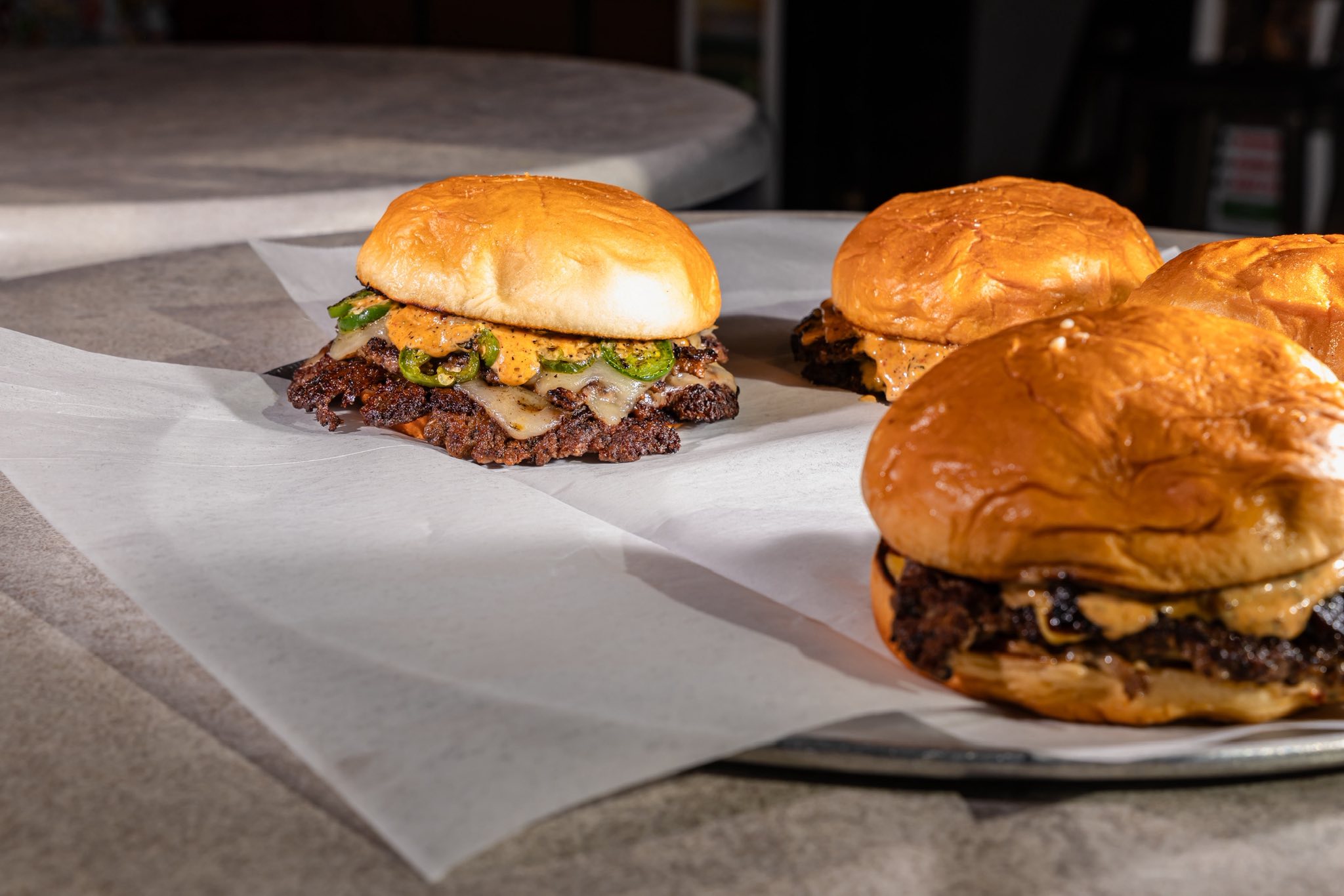
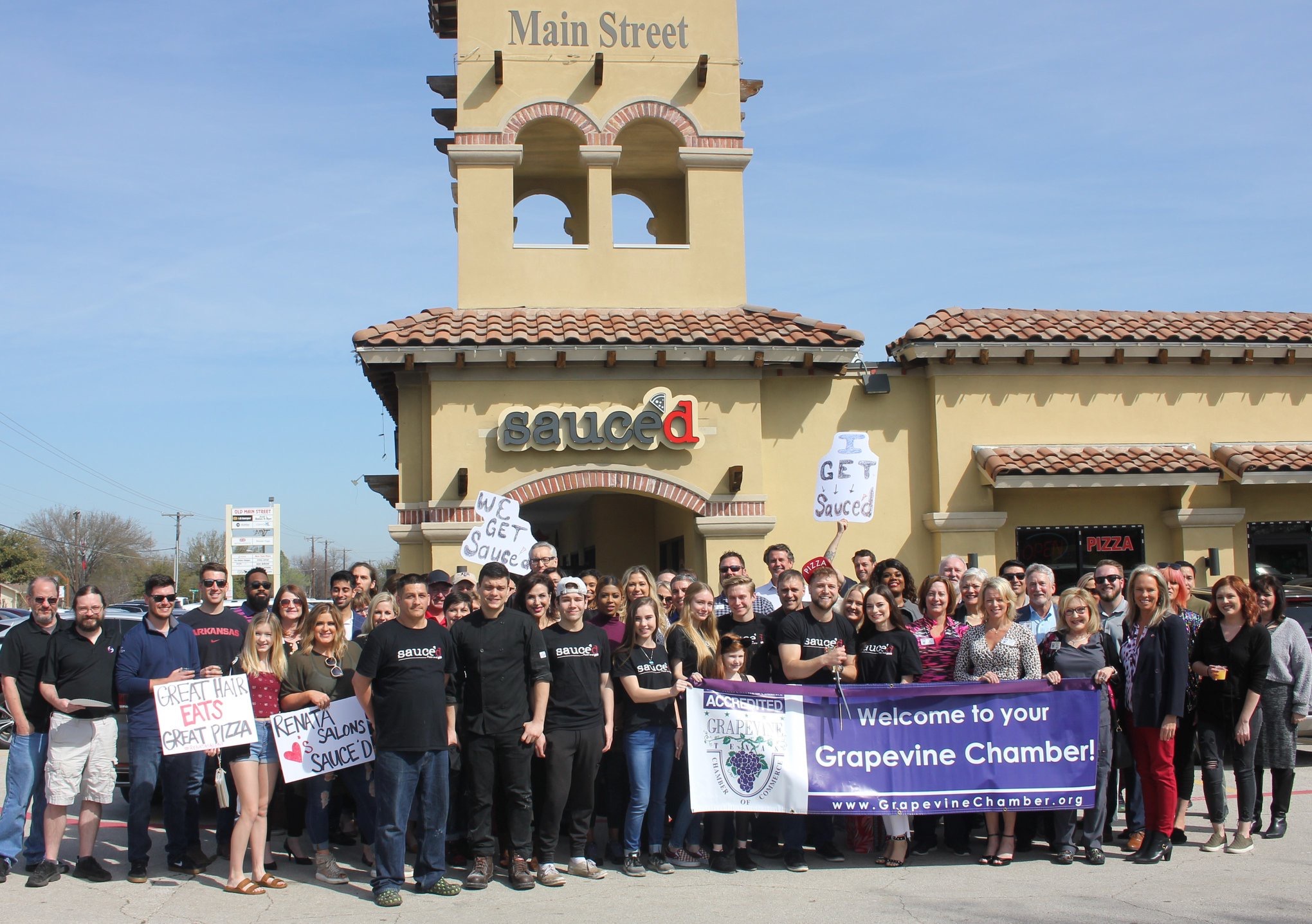
Three years ago, Sauce’d Pizza & B.Y.O.B. introduced a new menu item that, while saucy and circular, didn’t quite fit in with the rest of the fare at the locally-owned pizzeria. Since then, caramelized beef patties and garlic-buttered Hawaiian buns have risen to the top of the order log with such momentum that the shop had to update its branding.
These days, it’s Sauce’d Pizza & Smashburgers.
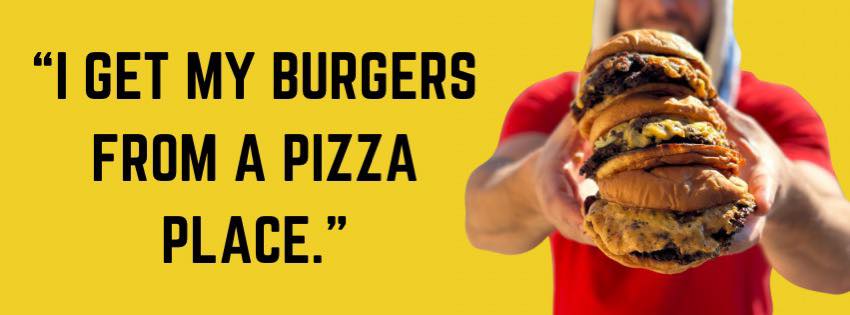
Conner Gildenblatt, who owns the store and spent the better part of a year perfecting the five-variant entree, can usually be spotted wearing a bright yellow t-shirt that boldly declares “I get my burgers from a pizza place.” He’s immensely proud of the restaurant and eager to share the story of the smashburger’s unlikely ascent with trademark speed and enthusiasm... but equally happy to tell you that he used to be afraid of anything more comple than a microwave meal.
The (Completely Different) Family Business
Gildenblatt never had that trademark moment of culinary inspiration we’ve all come to expect from successful chefs, cooks, and foodies. There was no perfect bite that unlocked his imagination, no signature experiment that proved his pallette. If anything launched his journey into the kitchen, it was a combination of entreprenuerial moxie and curiosity.
“When I met my wife, I knew how to make mac and cheese in the microwave or a peanut butter and jelly. That was pretty much it. I was even scared to make cinnamon rolls because I couldn’t tell if they were browned yet. Like, I didn’t know what I was doing,” said Gildenblatt.
He graduated high school here in DFW and spent a year learning the ropes of audio engineering before dropping out of college to join a family promotional items businesses based in Iowa. Generations of Gildenblatts had made their living offering t-shirts and other giveaways to community partners, then financing them with sponsorships from local businesses that wanted brand exposure tied to those souvenirs. It was a fairly common business model that most people have probably interacted with, whether they know it or not.
“It started in the 70s with maps. My Dad took that idea and turned it into pizza magnets. We were workign with Domino’s, Pizza Hut, Pappa John’s, Marco’s; their logo at the top, a calendar in the middle, and a local business at the bottom. Mainly Realtors. They wanted to get inside the home,” said Gildenblatt.
“I started making pizzas in the backyard because I wanted to be able to talk to pizzeria owners and get them to sign up. I wanted to talk their language, so I learned how to make pizzas. Turns out, at the same time [my grandfather was looking to change industries], the pizza place we’re at today was for sale in my hometown, right down the street. I mean, I learned to drive in that parking lot. It was the perfect opportunity.”
They bought the shop, and Conner spent a single month rotating through every job in the existing restaurant before the owners handed him the keys. He went from dish washer to line cook to managing operator in thirty days. As you can imagine, a few hiccups followed.
If You Can’t Stand the Heat…
It’s not uncommon for family-owned restaurants to set limited hours. Sometimes, they can’t afford to run the store more than a few days per week. Often, they have to balance staffing and operational expenses against order volume. In the early days, Sauce’d had a more... specific problem.
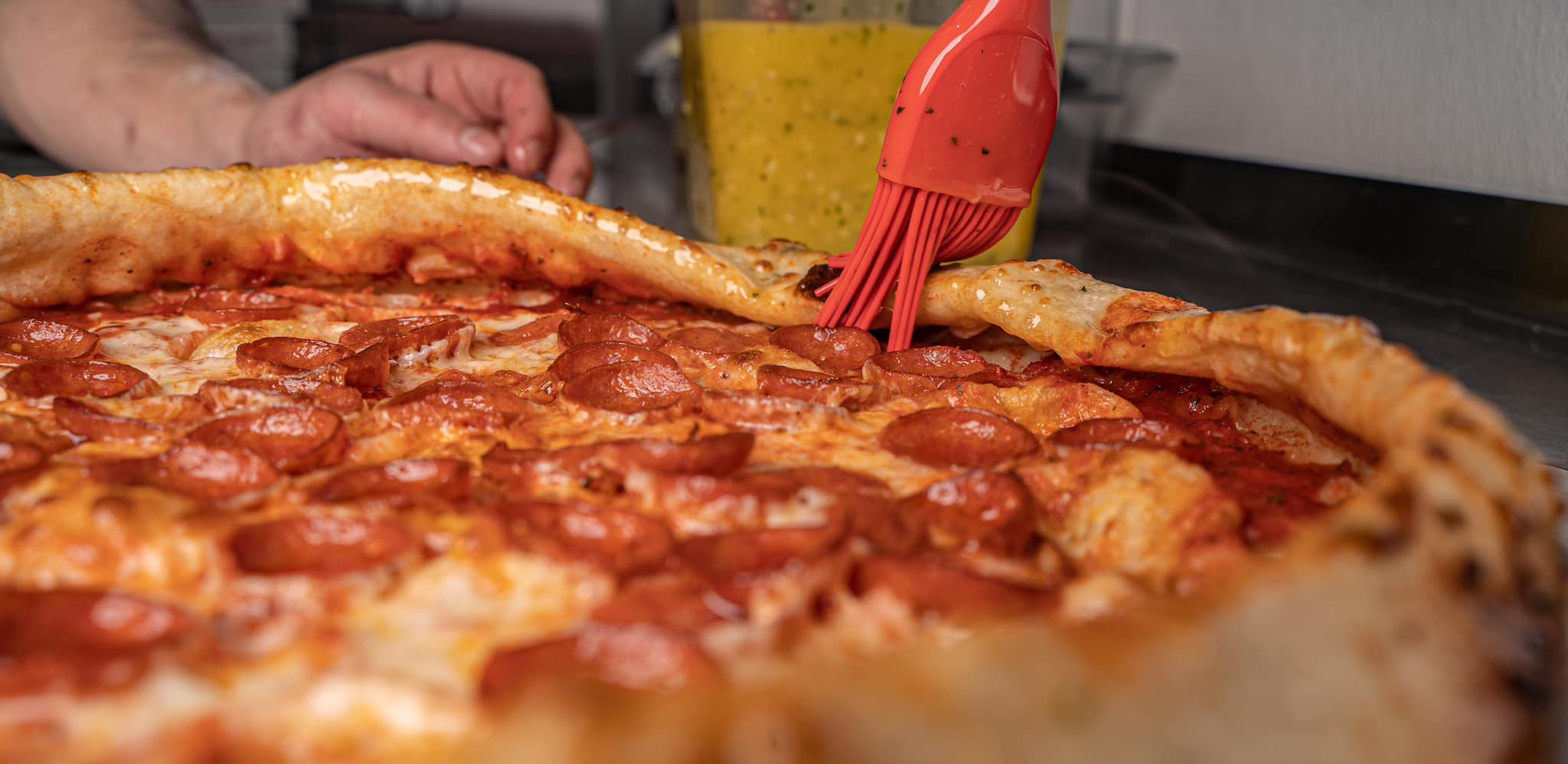
“On Day 31, they handed me the keys and the old owners were gone. It was just us... me and my brother, my wife, his girlfriend at the time, two of my sisters, and then a few employees we hired to make it work,” said Gildenblatt. “Our first two months, we were closed every Wednesday because that was the one day my only employee who knew how to make pizza couldn’t work. He had appointments and stuff with his daughter, so everyone asked why we weren’t open on Wednesdays and I was like: ‘because Vinny can’t work on Wednesdays and we don’t know what we’re doing by ourselves.’”
Then, just as the team started to find their way, a global pandemic shut everything down again. Like many small businesses, Conner and his team had to navigate public safety guidelines that shifted with every new discovery regarding the novel coronavirus and COVID-19. While food production was considered an “essential businesses,” many restaurants closed their doors or reduced staff to adapt first to social distancing requirements and then masking protocols. But, as a delivery-ready concept with a single household at the core of its staff, Sauce’d had a distinct advantage.
“It was just me, my wife, and my brother. I think the rules were ‘family only.’ We were a family business; we weren’t closing down. It was basically like we were at home! So we stayed open, never closed, and did delivery. It was me or my brother, driving the car around and dropping pizzas off with a pizza paddle out the window because we couldn’t touch anybody. We survived through sheer tenacity and the opportunity presented by being a family. I think a lot of businesses went that route.”
The world eventually eased back into a sense of normalcy, allowing Sauce’d to develop a rhythm and build a staff unified by culture and competitive wages. Gildenblatt attempted to launch a second store, but pulled back a few months later to focus on the original site in Grapevine. He pared the menu down from 80 items to a sleek 15 pizzas, complimented by a curated list of pasta and sandwiches. The chaos faded, and things leveled out. For a few years, anyway.
...Learn to Make Smashburgers
In 2023, Gildenblatt caught wind of a new competitor coming to the market. One that came with franchise-level capital and multiple locations in massive markets like Naples, Italy and Miami Florida. A brand with strong resources and an even more compelling story... which he strategically never names outright.
“When that company opened up a hundred feet from our store, I said ‘that’s it, we’re rolling out smashburgers.’ I made an announcement the day they opened, and we had one of our busiest days to date because of those smashburgers,” he said. “I did not want to be in direct competition with a world-renowned pizza company. They’re literally here because his product was so good he got an O1 visa! That is an incredible story. We’re not competing with that. We’ll let them run their race, and we’ll get some smashburgers. We did, and it was the best decision we ever made as a company.”
To be clear: this wasn’t a rapid rollout of a long-tested item. It wasn’t even a surprise announcement of a concept coming soon. It was a calculated risk, designed to capture and redirect an audience that is almost always craving something new in the world of food service.
“I’ve been making burgers my own way for a long time,” said Gildenblatt, referring back to the days when his father asked him to man the grill in his own backyard. “ur first six months of making these smashburgers, I made them completely wrong. They tasted great, but I was adding in egg and Worcester sauce. Salt and Pepper, smoked paprika and chili powder. The burgers were shrinking on the grill because of all the moisture I was adding.
“The point of a smashburger is to smash it so it sticks to the grill; they couldn’t stick with all that moisture. So we were making fake smashburgers – like, a version that I messed up – so six months in, we decided to fix it [so it was a real smashburger with a crispy, caramelized crust]. I knew it wasn’t a perfect product, but we perfected it and were first-to-market as far as the algorithm goes.”
It was a new variation on Conner's old playbook: jump at an opportunity, then refine your approach over time. Just as the family eventually learned the ins and outs of hand-crafted pizza, Gildenblatt and his kitchen staff spent half a year testing ingredients and ratios, swapping cheeses, and trying new buns. Three years later, the refined and perfected smashburger is their top seller; the star of promotional messaging, viral social media campaigns, and a new food truck concept elsewhere in DFW. Bouyed by excellent timing and a powerful market, Gildenblatt thinks there’s no telling where that innovation will take him next. And that’s just the way he likes it.
"I don’t know how we got here. I mean, I know we put in the effort and I tweaked the recipe daily until we found one I really liked. We went through an approval process for the right bun. I changed my cheese three different times in the beginning... I used to barely be able to make mac and cheese in a microwave, and now we have figured out our one main item that is going to take us places I don’t even know yet.”
For more stories about unique individuals and businesses here in Grapevine, be sure to subscribe to the ‘Growing Grapevine’ podcast and eNewsletter. Got a passion project of your own? Let’s talk about where Grapevine fits into your plans.
More Topics