

This Grapevine-Based Company Wants to Revolutionize Your Floor

1 Aug 2026
News, Blog, 2026
Consumer brands find themselves at a strange inflection point these days. The average customer cares more about personalized service and bespoke options than ever... but, at the same time, most buyers are working with a budget sheet that has only been getting more strained. Generally, if you want to save a little money, you’re going to look at bulk suppliers who keep costs low by negotiating at volume. That usually means a few generic options rather than the highly-customizable offerings you’d find at a high-end retailer or a niche Etsy shop.
If you’re buying something like socks, generic white and black options are fine. More specific goods – or things that carry sentimental value – tend to command more attention to detail. You may want your name monogrammed on your personal journal or your one-and-only raincoat to be your favorite color. So what about the things in between? Objects you use regularly but specifically, enough to really care about the details but worry about the cost.
What about arguably the single-biggest design element in your home... the thing that connects multiple rooms, appliances, and pieces of furniture; underscores your whole vibe while taking the beating of everyday use? The only thing that covers so much ground you can’t cut corners, even though it includes so many little nooks and crannies as to demand special cuts specifically at each corner? Who do you call when you absolutely have to get your floors right?
Grapevine-based Flooret wants you to think of them.
Flying Solo, Everywhere
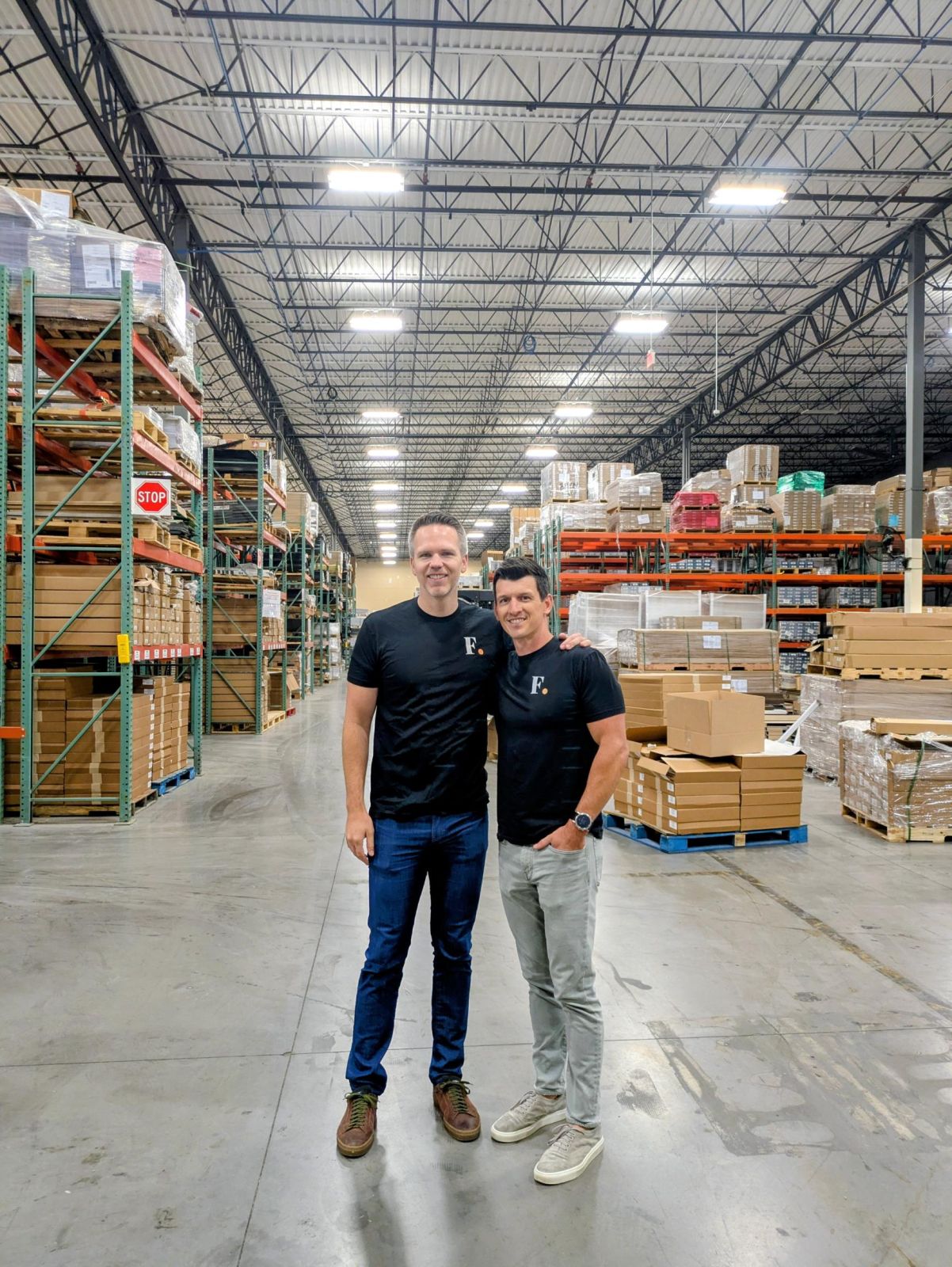
It’s difficult to capture just how odd Flooret’s business plan is. They sell high-end flooring materials designed to be installed by the customer rather than a professional team, and their process is built to meet the customer online first, even though strategic partnerships have put their product on showroom floors across the US. It’s an omnichannel approach to an industry that is pretty famously mono-channel, centered around customer service even though customers and employees rarely meet face to face. But, according to CEO Clint Mickle, it’s working specifically because of that tension.
“Better floors, better way is our mission statement,” Mickle said. “We’ve been around over ten years, but what’s made us really successful is curating a designer-led offering of the best products with the best customer service. There’s nothing truly proprietary about floors. You can buy them anywhere. But you want to buy floors from somebody that delivers a quality product and has a quality customer service team, and one of the unique things about Flooret – why we’re having a lot of success – is that none of our executive leadership came from the flooring industry. That’s incredibly rare; I haven’t found another company in this industry that is built that way.”
“We’re trying to do something hard, which is have an omnichannel business in flooring. Most people pick a lane: we’re direct-to-consumer, we’re a commercial flooring business, we’re an installer, or an independent retailer. But we aren’t afraid to fail fast and try new things, and a lot of that is because we have an amazing team with diverse backgrounds and amazing ideas.”
Mickle himself is a prime example. He stepped into the CEO role when his longtime friend, John Merris, had to back away to focus on family. The pair of them had previously mastered the art of omnichannel consumer brands at another Grapevine-based company, Solo Brands. Merris unified that company’s portfolio around lifestyle products like SoloStove and Chubbies a few years ago, and cut the ribbon on the Grapevine headquarters himself. After taking Solo Brands public with a $2.1 Billion-dollar valuation in 2021, he swapped over to a new c-suite roll with Flooret.
At the time, the company was in transition from a family-owned group of stores in California to a nation-wide brand. They had operations on the West coast, and a new warehouse in Tennessee. Merris – and, later, Mickle – were part of the team that launched a new operation here in Grapevine. It was an easy transition: their facility is a two-minute drive from the building that still houses a Solo Brands showroom today.
Building Around the Team
Some of the company’s operation model comes from lessons learned at Solo Stove, from inventory management to warehouse design. But for Merris – and even more so for Mickle, when the two traded places – the most important data points had more to do with people than product.
“One of the first things I did when I took over the CEO role was spend weeks, probably months, with the executive team defining what our core values are,” Mickle said. “For a lot of people, that process looks like choosing the best core values out of the dictionary. That’s not what we did. We focused on what was making us successful. Who were the people leading within the organization, and what was unique about them? What’s unique about how we’re winning today? We decided to define those traits, and then be very intentional to find people and hire people who embody those core values that already live inside the organization.”
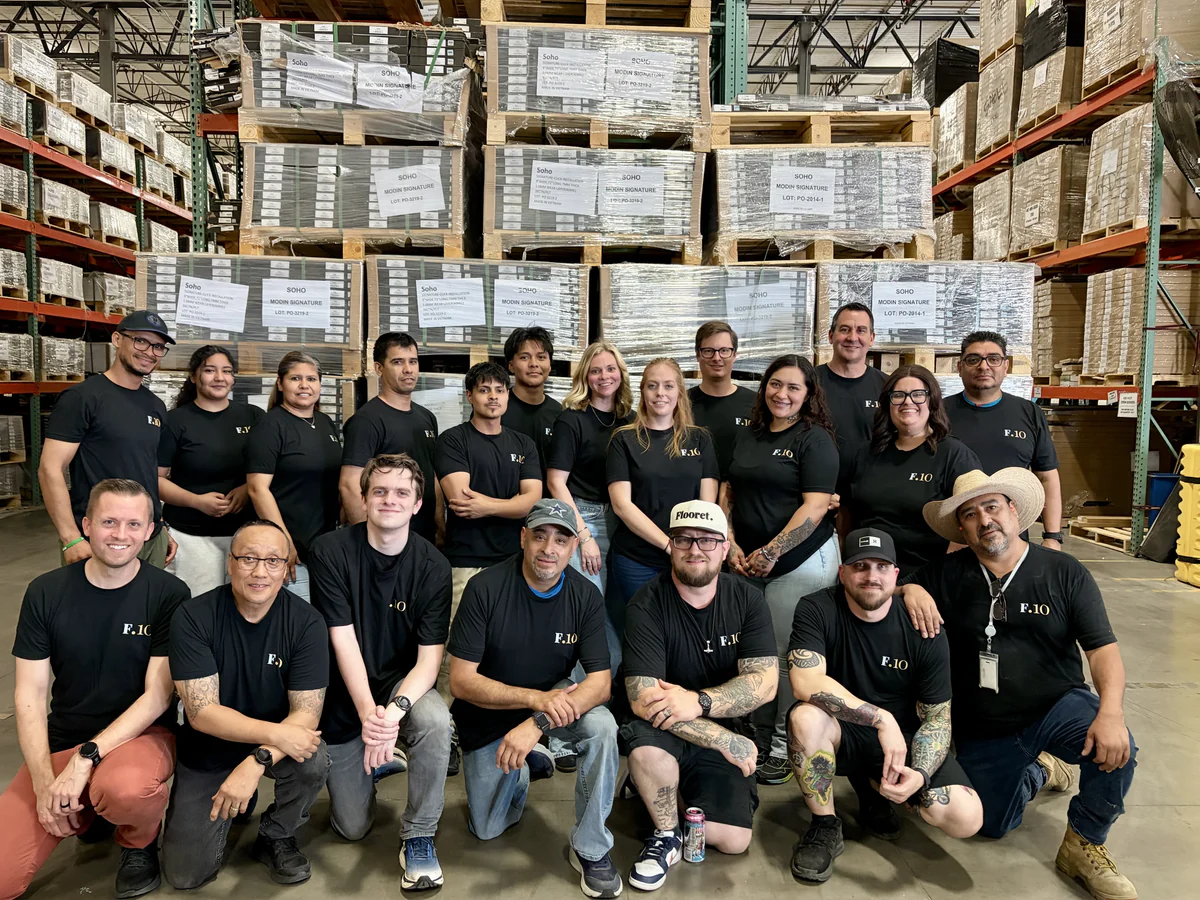
Because the company was more concerned with challenging the existing industry model than replicating it, Mickle and his team felt free to hire based on individual capability and passion instead of institutional knowledge. Knowing floors became less important than knowing people, and Flooret leaned on analytical tools like CultureIndex to identify an employee’s “superpowers” before filling a role. Sure, the carpenters responsible for hand-shaping the company’s signature curved stair nosing needed to know their way around a tool bench. But it’s one thing to hire someone who can work a saw and another to find the person who will laboriously design a special press that can convert any factory-made plank into a perfectly shaped bespoke object that seamlessly integrates the product throughout a floorplan.
Flooret hired that person, and more like him.
“We hired a designer a few months ago who has been incredibly helpful in curating new products,” said Neal Puckett, who oversees Flooret’s emerging Commercial division. “Ultimately, our goal in Commercial is to have a full range of products that we can use to capture the full scope of customer demand, whether it’s the wood look, concrete, stone, or marble. I’m so pumped for what the future holds for us. We’ve got a huge product road map for 2026 and beyond. If I could snap my fingers and have 15 different collections to offer, that’s the ideal scenario.
“But I also recognize that good things take time, and what we don’t want to do is grow too fast. We want to perfect the things we have now, that we’re good at, and build off of those. It’s pretty remarkable what we’ve done in the last 15 months with Commercial. We are now working with some of the largest organizations in the world, and taking those accounts away from top manufacturers of flooring products that have been around for 100 years. We get feedback all the time, saying that we are just so easy to work with; that our service is unlike anything they’ve ever experienced, and we’re the client’s most-trusted vendor going forward. That’s pretty cool to hear, and I credit the team we have.”
While Flooret remains a direct-to-consumer brand above all else, their passion-led approach to growth and willingness to pivot have made efforts like a Commercial division possible. Mickle says the share of sales within the company has grown from “a few percentage points” of overall revenue to nearly 15% of their overall trade. That’s due in large part to their service-driven approach, amplified from a one-on-one interaction with online agents and replicated into a team-by-team collaboration between Flooret staff and large-scale buyers.
Learning (and Growing) Fast
None of the above should be taken as proof that innovation is easy. Scaling a company is always challenging, and both Mickle and Puckett own up to a few missteps along the way. But, again because of the company’s overall ethos and values, they were willing to try something for the sake of learning as well as expanding.
“I didn’t know what I was getting myself into,” Puckett said, referring to his efforts to launch the company’s Commercial division last year. “Clint mentioned that we’re not afraid to fail, and one of the things I learned quickly was that it’s really hard to grow a commercial channel if you’re manufacturing the product and also installing it. We started out, right off the bat, meeting with 50 design firms, owners of real estate, broker buddies of mine, and – because we thought it was a great idea to also offer installation – 15 General Contractors here in Dallas. Right off the bat, we were bidding 20 jobs a week, even if our product wasn’t spec’d on it . After a few call-outs from contractors around town, we learned that wasn’t the best model and pivoted. We made a change, and we learned a lot.”
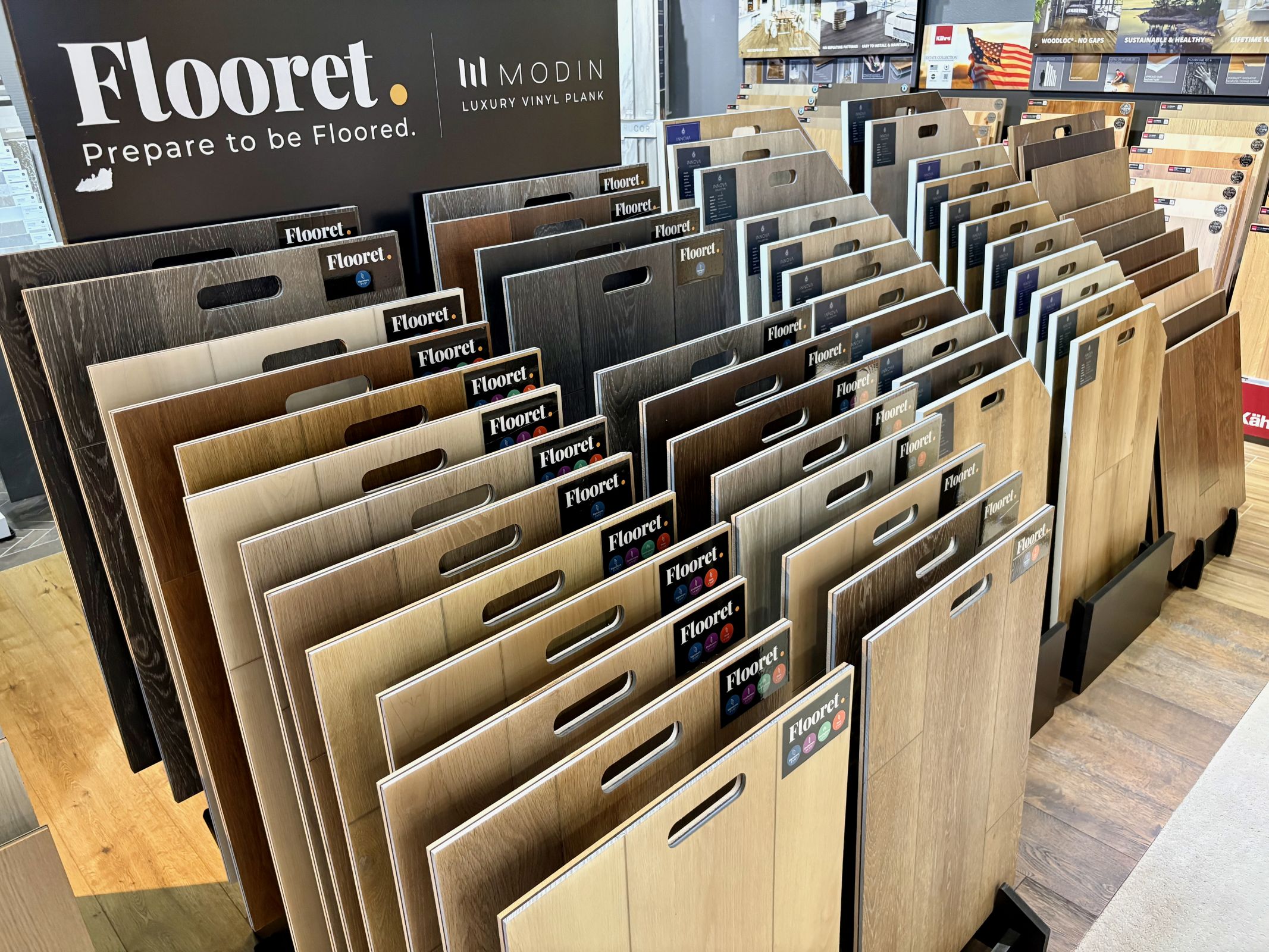
Flooret no longer offers direct installation services, at least for the time-being, but they do maintain a database of referral-worthy partners. The time may come for them to re-evaluate that policy, but it’s not an essential strategy point just yet. Instead of chasing those contracts and managing their associated logistics, the team is focused on refining the practices and process that earn stellar reviews from homeowners and corporate clients alike. And, just like they followed the data in staffing, they’re letting the numbers chart a course for growth.
“We’re a data-driven company, and I think that’s a huge differentiator,” Mickle said. “We track our sample cohort trends meticulously, so we understand exactly how people who ordered a sample from us in January of this year compare to December of last year and January of last year. We maintain a record of what we’re doing to bring people in, and then work to maintain that level of conversion.”
Usually, that means crafting more of the products in high demand and sunsetting colorways that, while nice to have on offer, take too long to trickle out of the warehouse. But there’s a higher level of refinement, too; one closely associated with the decision to consolidate operations here in Grapevine as the company plans for another decade of evolution.
“We already had a high level of familiarity and confidence in this area [from our days at Solo Brands]. It’s a great location, centrally located, with a strong talent pool,” Mickle said. “It’s also a very business-friendly environment. When I joined Flooret, we had a location in Washington, one in Tennessee, and then the one we opened here. And we quickly realized that we wanted to perfect the model here in our own backyard. Our warehouse is attached to the office, and we wanted to bring everything here so that we could protect the process and perfect it here, then be intentional about scaling and adding other locations over time as it makes sense for the business.
“We thought it was going to cost us a lot more to ship all out of Texas, as opposed to having Texas, Washington, and Tennessee. But we’ve found that our shipping costs have stayed exactly the same, if not less. So we feel like coming here was definitely the right call for the brand.”
Could our City be the right call for your brand, too? Let’s talk about it. For more stories about unique individuals and businesses here in Grapevine, be sure to subscribe to the ‘Growing Grapevine’ podcast and eNewsletter.
More Topics